Crop EPS Mutant Library

A Self-Propagating Mutagenesis Drive for Sustainable Crop Improvement

🧬

What is EPS?

Trifunctional System EPS (Egg-cell-specific, Pollen Self-elimination, Seed-fluorescent reporting) is a revolutionary architecture designed for autonomous crop mutagenesis. The system integrates three core components working in harmony:

πŸ₯š Egg-Cell Mutagenesis
DD45Pro-NLS-APOBEC deaminase introduces heritable mutations specifically in egg cells with high precision
🌸 Pollen Self-Elimination
PG47Pro-ZmAA1 toxin selectively eliminates transgenic pollen, ensuring hemizygous inheritance
πŸ”΄ Seed Reporter
LTP2Pro-DsRed2 enables high-throughput fluorescence-based sorting of EPS(+) seeds

This self-sustaining mutagenesis drive enables autonomous, generation-by-generation accumulation of mutations without recurrent transformation or manual intervention. The system dynamically maintains propagating mutant populations, providing a living mutation library for functional genomics research and crop breeding programs.

Note: Detailed EPS vector map along with full elements are provided in Supplementary Figure 1 and the Methods section.
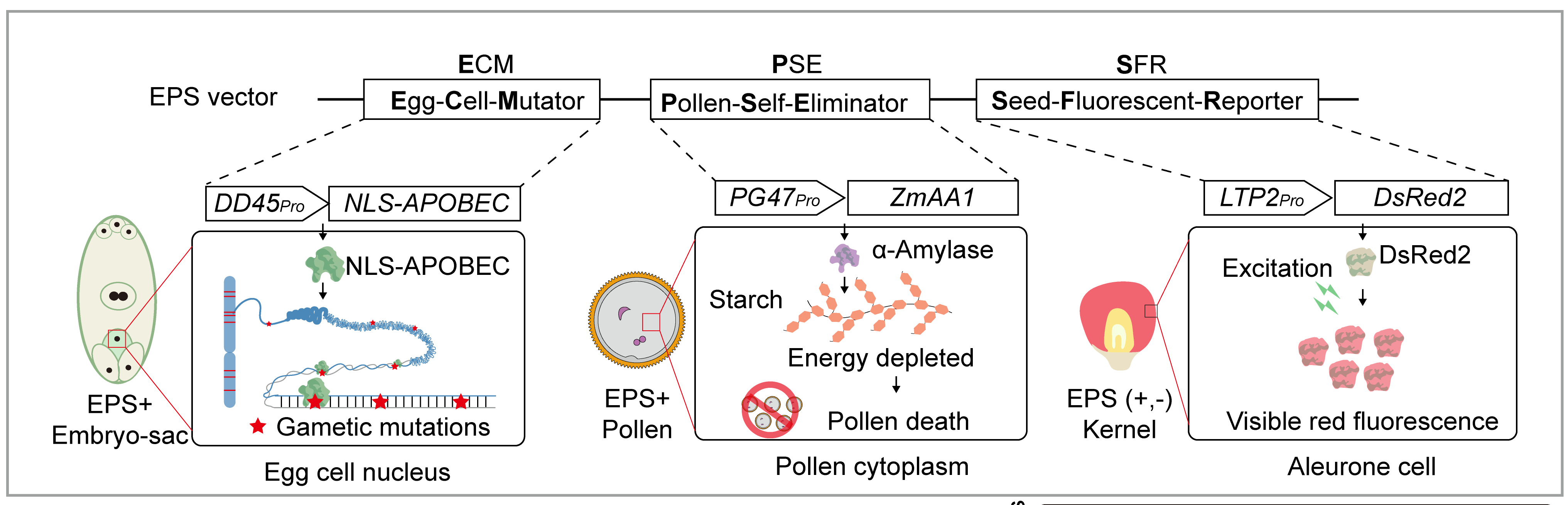
EPS Cassette Design
Figure 1. Design of the self-propagating EPS cassette showing the trifunctional architecture
βš™οΈ

How EPS Works

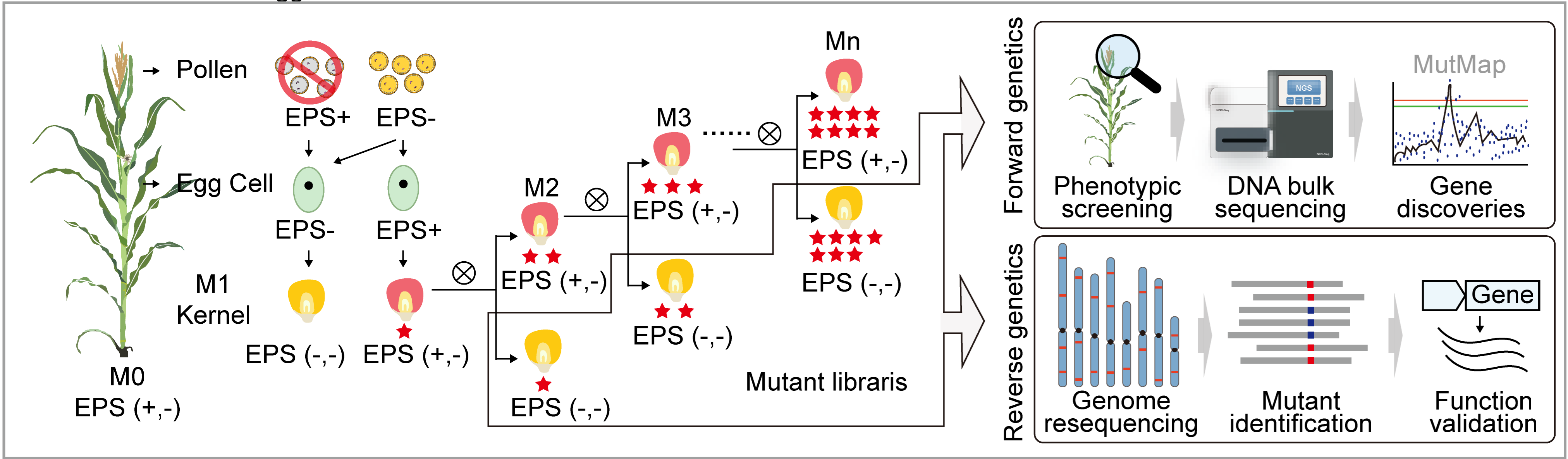
The EPS system operates through a sophisticated generational cycle that maintains and enriches mutation loads across successive generations, creating a self-sustaining research resource:

🌱 M1 Generation
Initial transformation generates M1 seeds. These are sown and allowed to self-pollinate naturally.
πŸ›‘οΈ Selective Elimination
ZmAA1 toxin eliminates transgenic pollen, preventing homozygous accumulation and ensuring stable hemizygous inheritance.
πŸ“ˆ Enrichment Cycle
Continuous selfing generates enriched mutant populations (M2, M3…) while the EPS drive cassette is maintained.
✨ Fluorescence Sorting
DsRed2 fluorescence allows high-throughput sorting of EPS(+) kernels, creating a living mutation library.

Applications: Sorted EPS(+) kernels provide a living mutation library for:
(i) Next-generation sequencing-based rapid gene identification via MutMap
(ii) Forward- and reverse-genetic screens for phenotypes of interest

EPS Pipeline
Figure 2. Pipeline for generating and utilizing the mutant resource through generational propagation
🌍

Pan-Poaceae Functionality & Applications

The EPS system demonstrates remarkable versatility across major cereal crops, establishing its potential as a transformative platform for sustainable crop improvement with broad applicability:

🌽
Maize
Zea mays
Validated functionality with high-efficiency mutagenesis and stable inheritance patterns
🍚
Rice
Oryza sativa
Successful transformation and autonomous propagation demonstrated in japonica and indica varieties
🌾
Wheat
Triticum aestivum
Hexaploid compatibility confirmed, significantly expanding the system's applicability

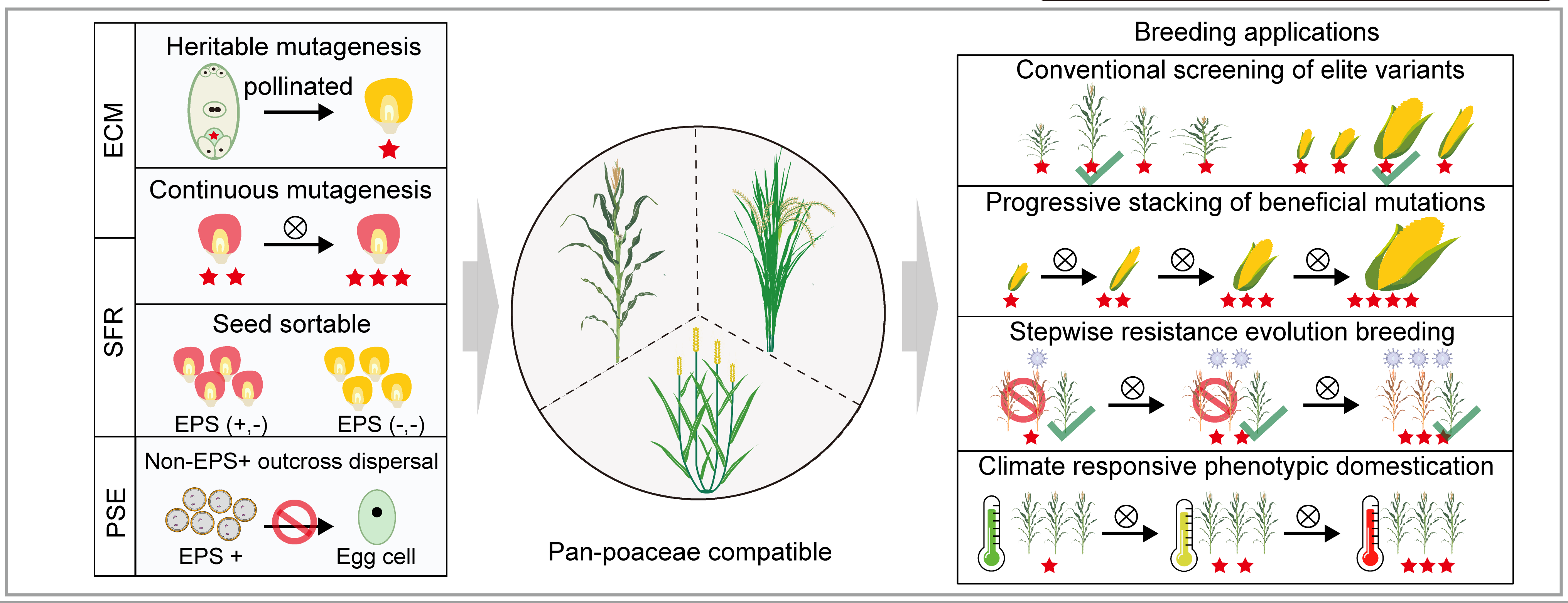
β˜… Demonstrating Pan-Poaceae Compatibility β˜…

The EPS system is functional across major cereal crops, with kernels marked by star symbols (β˜…) indicating progressive mutation load enrichment.

Pan-Poaceae Applications
Figure 3. Validated pan-Poaceae functionality and applications across maize, rice, and wheat
πŸ“Š

Project Progress

Ongoing Research Through Agrobacterium-mediated transformation, we have successfully generated EPS transformants in maize, rice, and wheat. Through successive generations of propagation and phenotypic screening, we have established a comprehensive mutant population:

Crop Species Transformation Recipient Cultivars Transformation Event M1 M2 M3 M4 M5 M6
🌽 Maize CA7301 16 155 1005 1931 5631 3342 2185
🍚 Rice Huanghuazhan 65 1306 1480 - - - -
Xiaowei 9311 18 215 - - - - -
Xiaowei-Nipponbare 15 263 - - - - -
🌾 Wheat Jimai 38 18 51 960 - - - -
Zhongmai578 22 792 405 - - - -
Zhongmai895 5 96 102 - - - -

Status: Active Cultivation The population size demonstrates successful establishment and propagation of EPS lines across multiple generations. Maize lines have advanced to M6 generation, while rice and wheat populations are expanding in early generations.

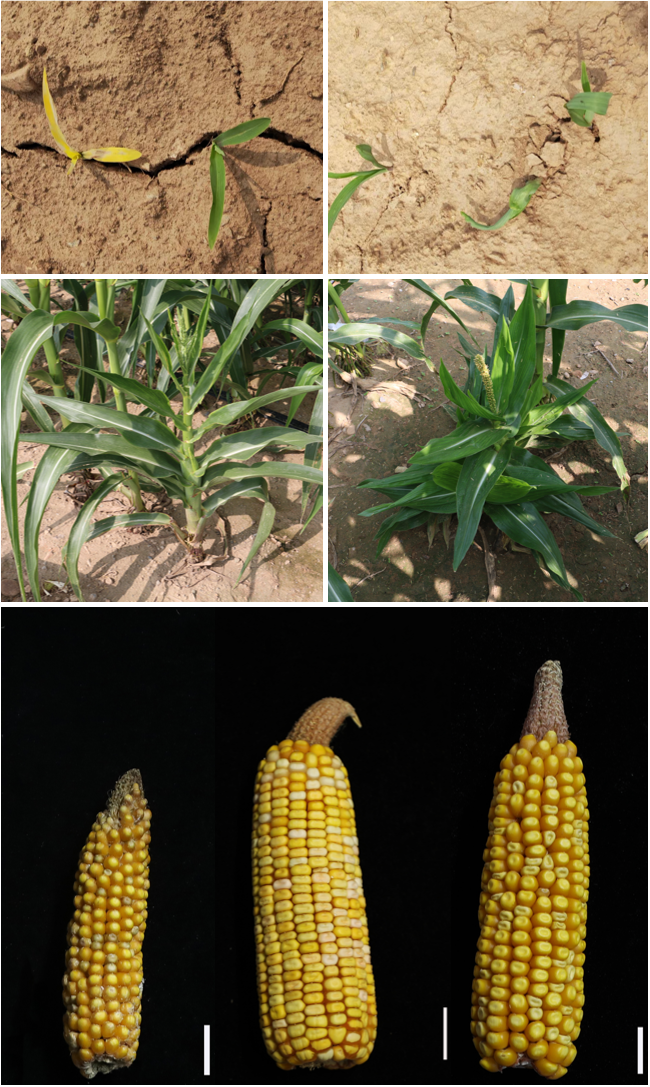
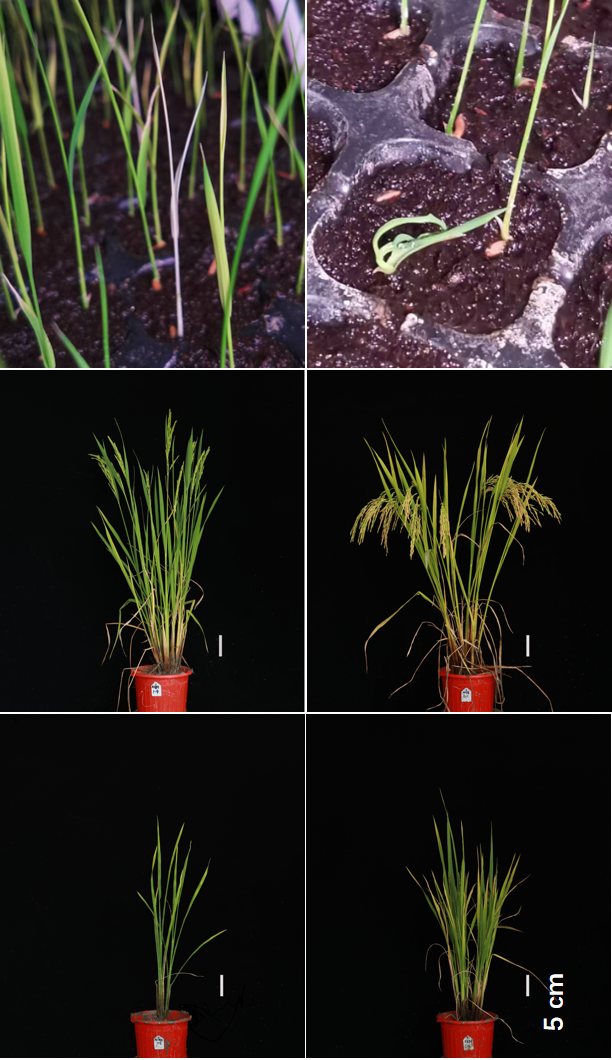
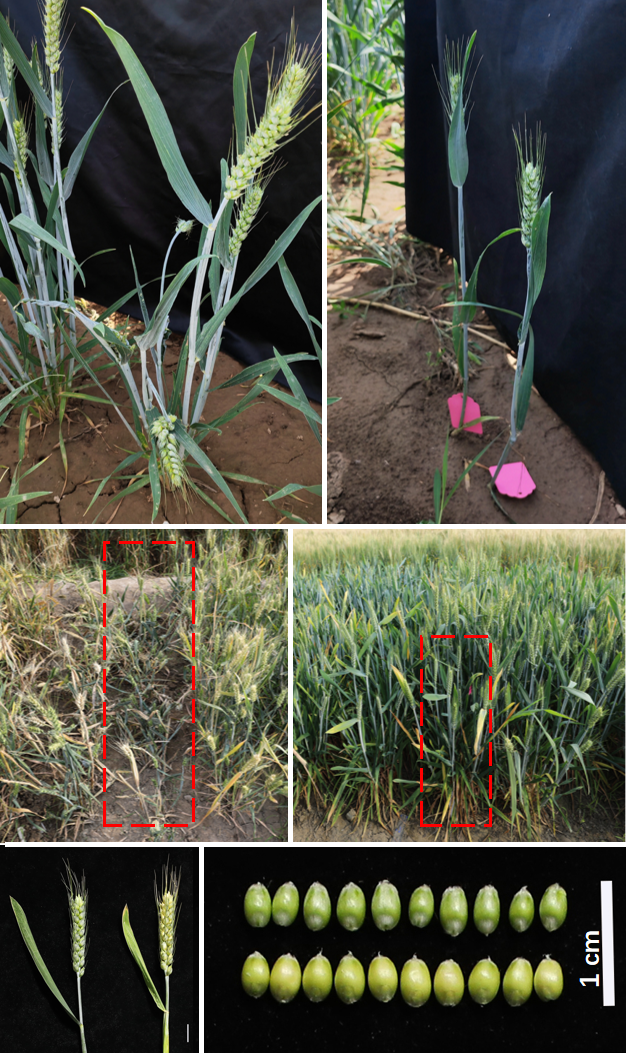
EPS Mutant Phenotypes

Figure 4. Phenotypic diversity observed in EPS mutant populations across maize, rice, and wheat